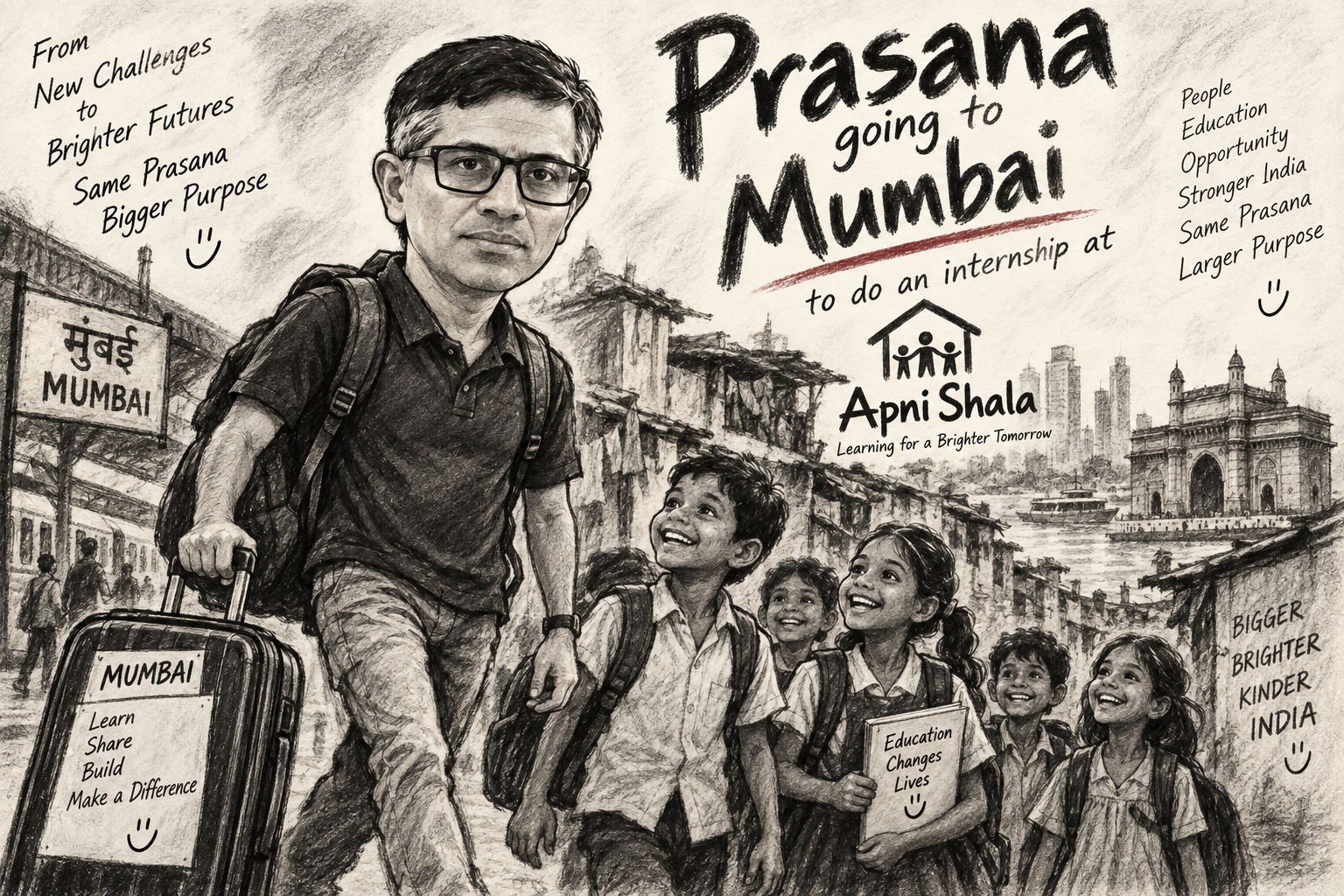
Stories of Hope & Resilience: My Summer at Apni Shala
It was raining the way only Mumbai rains in July. I hadn’t been out in a Bombay monsoon in a long time, and I was enjoying it — walking to a school in Govandi, through the downpour, through a meat market, past the stalls. But I couldn’t shake one question: What am I actually doing here? Can I do anything useful at all?
I’d come for a five-week internship, half of it full-time at Apni Shala, a Mumbai nonprofit that brings social-emotional learning into schools serving the urban poor. I arrived with more questions than answers. Three people answered them — a 13-year-old boy, a room full of engineering students, and a man who grew up on the streets. I shared their stories at TAP’s Story Time on September 19. Here they are.
Setting the stage
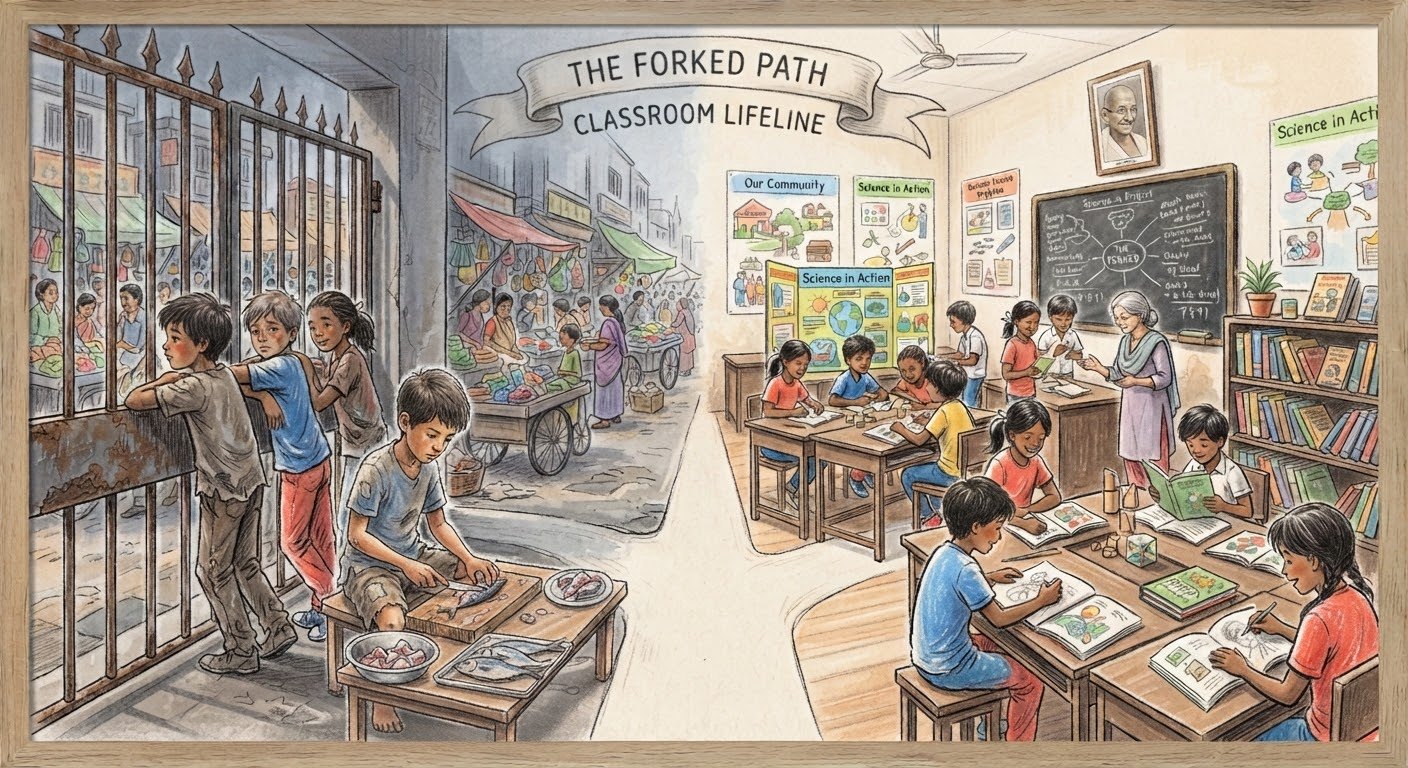
Before the stories, a number. Rohit, Apni Shala’s founder, told me that about half of the students in these communities drop out around fifth grade. Some leave to earn money for their families. Some don’t get a choice.
Mumbai’s urban poor live in horizontal slums and — a term I heard for the first time — “vertical slums.” The insecurities stack on top of each other: not enough food, no safe shelter, no guarantee of physical safety. I’d been told by friends in the NGO world that children here have smaller body frames. I’m a very experiential learner; I had to see it to believe it. And I saw it. In my grade 5–9 sessions, many of the 13- and 14-year-old girls had the frames of elementary schoolers. Nutrition, or its absence, was written on their bodies.
Apni Shala teaches the kids a language to tackle the emotions. It teaches children, early and explicitly, that poverty is not their fault, not a disease, and not a permanent handicap. It is just their circumstance. And it treats social-emotional learning (SEL) as a protective shield, not a luxury. For a child growing up amid fear and unpredictability, SEL means:
- Words to express big emotions, instead of carrying them alone
- Ways to resolve conflict, instead of swallowing fear or anger
- The feeling of being seen and valued
My shorthand for what that builds is empowered resilience. The three stories that follow trace it across a lifetime — childhood, youth, and adulthood.
Story 1 — Childhood: Joe’s birthday
That rainy morning was my fourth day. I walked into the municipal school, still turning my question over, and a boy stepped in front of me.
“Today is my birthday,” said Joe (not his real name). He was 13. He held out a Cadbury Five Star.
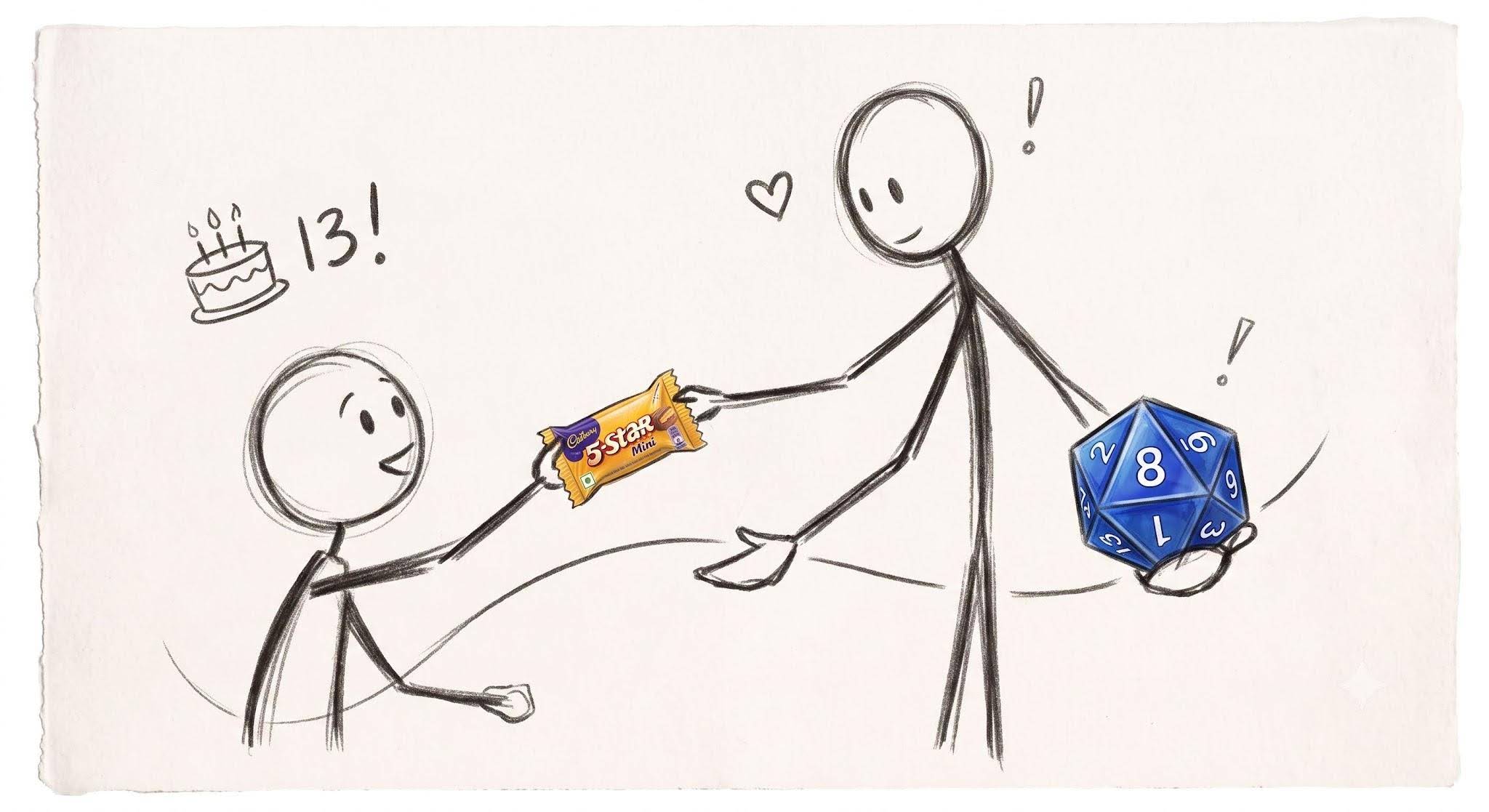
I’m a child of the 70s, and that moment took me straight back to my own childhood. This is exactly what we did. That’s how we celebrated. For a second, the distance between us disappeared.
Then, in a short and matter-of-fact exchange, Joe told me the rest. He is an orphan. He has HIV. He lives at Happy Feet Home, a hostel for children with HIV or cancer. He told me all of it without a trace of bitterness. Every time I think about it — every time I tell it — I get goosebumps.
Joe wasn’t finished. He invited me to his home, with one instruction: come on an empty stomach, because we feed everyone who comes. I cleared the visit with Rohit’s team. On the day, Joe found me in the middle of school to check I was really coming, and offered me a seat in the shared auto-rickshaw. I clearly looked like a foreigner, and he was worried I’d get lost. I told him not to worry — I had Google Maps.
When I arrived, Joe was beaming — a boy showing off his visitor. And as I walked in, I saw half a dozen faces I recognised: children I saw at school every single day and never knew lived here. It was, by definition, an orphanage. But there was no “pity me” anywhere in that room. So why should I look at it differently?
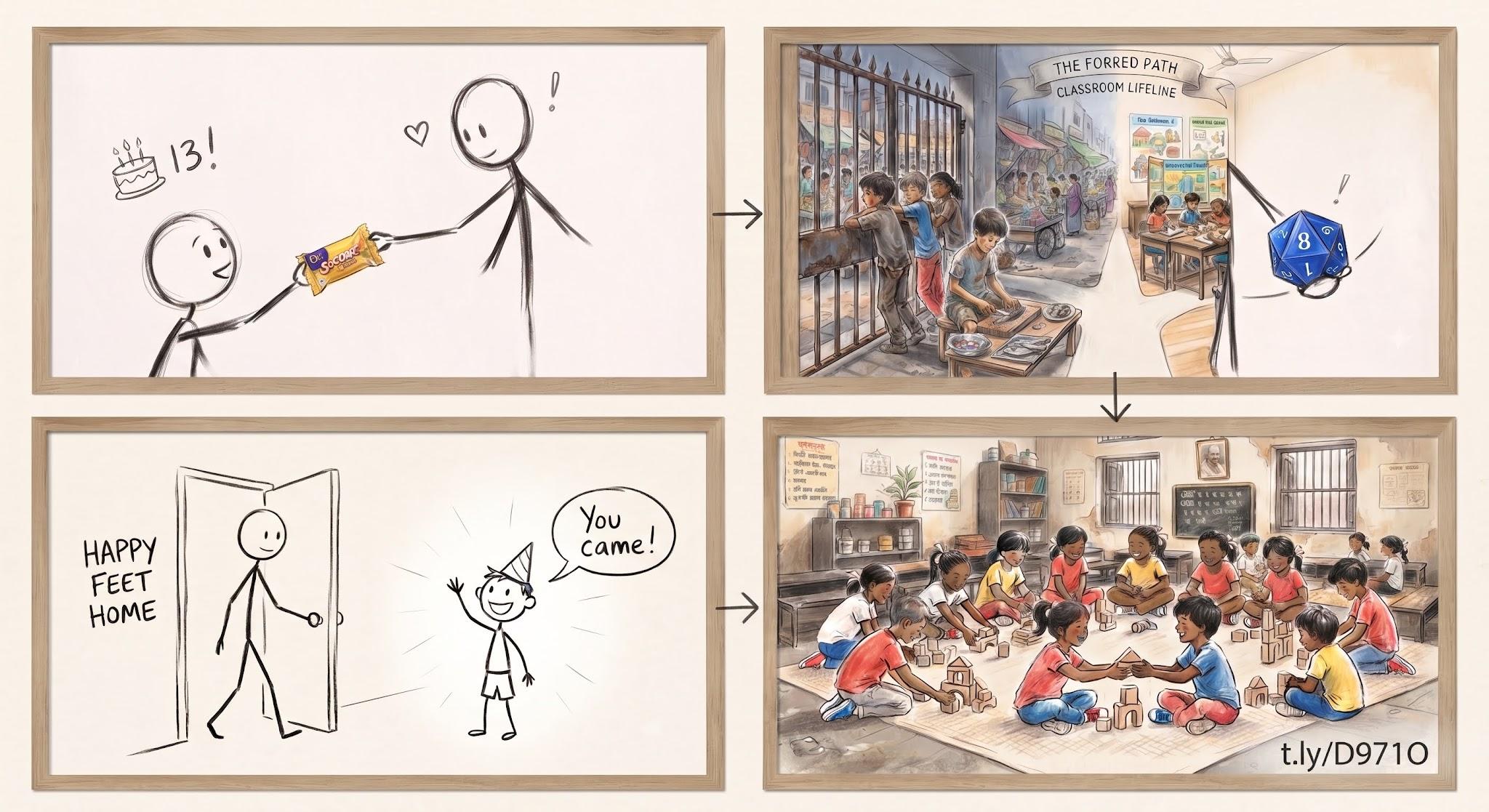
Poverty and illness are circumstances, not definitions.
What Joe taught me
Supported by that sense of safety, Joe now looks after his younger brother with the same care he’s been given. That day was my turning point. I had come as a problem solver. Joe showed me the view from his side — where the only way is up, inside an emotional sanctuary that other people make possible. I’m grateful I allowed myself to be vulnerable enough to experience it.
It also sent me back to my own story. I’m here because of my family, the village that raised me — and one pivotal moment: my engineering degree from TSEC. Which brings me to the second story.
Story 2 — Youth: the scholarship bridge
This one is intentionally technical. Numbers make the gap impossible to ignore.
At TSEC I sat with 15 TAP scholars. Ask them what they want to be and the answers come fast: data scientist, cloud engineer, full-stack developer — the buzzwords of their time. They are exactly as bright-eyed and eager as my own class was, and equally clueless about what’s out there. (When I was their age I was sure I wanted to be a hardware engineer, without really knowing the difference between hardware and software. I became neither.)
What’s different is the price. In the 1980s, my four-year engineering degree cost about ₹32,000. I graduated into a job paying around ₹30,000 — the whole degree cost about a year’s salary, and my parents could stretch to it with a loan. Today the same degree costs about ₹8 lakh. That’s 25 times more.
These scholars’ parents drive auto-rickshaws, work as security guards, and clean other people’s homes. For them, an ₹8 lakh loan isn’t a stretch; it’s a wall. And a degree only pays off if it leads somewhere.Unless it leads to a ₹10–15 lakh job, there’s no return on Investment — it’s basically a lifetime of mortgaging yourself. (The good news, from Principal Dr. Thampi: TSEC’s average package is around ₹12 lakh, even in a soft market.)
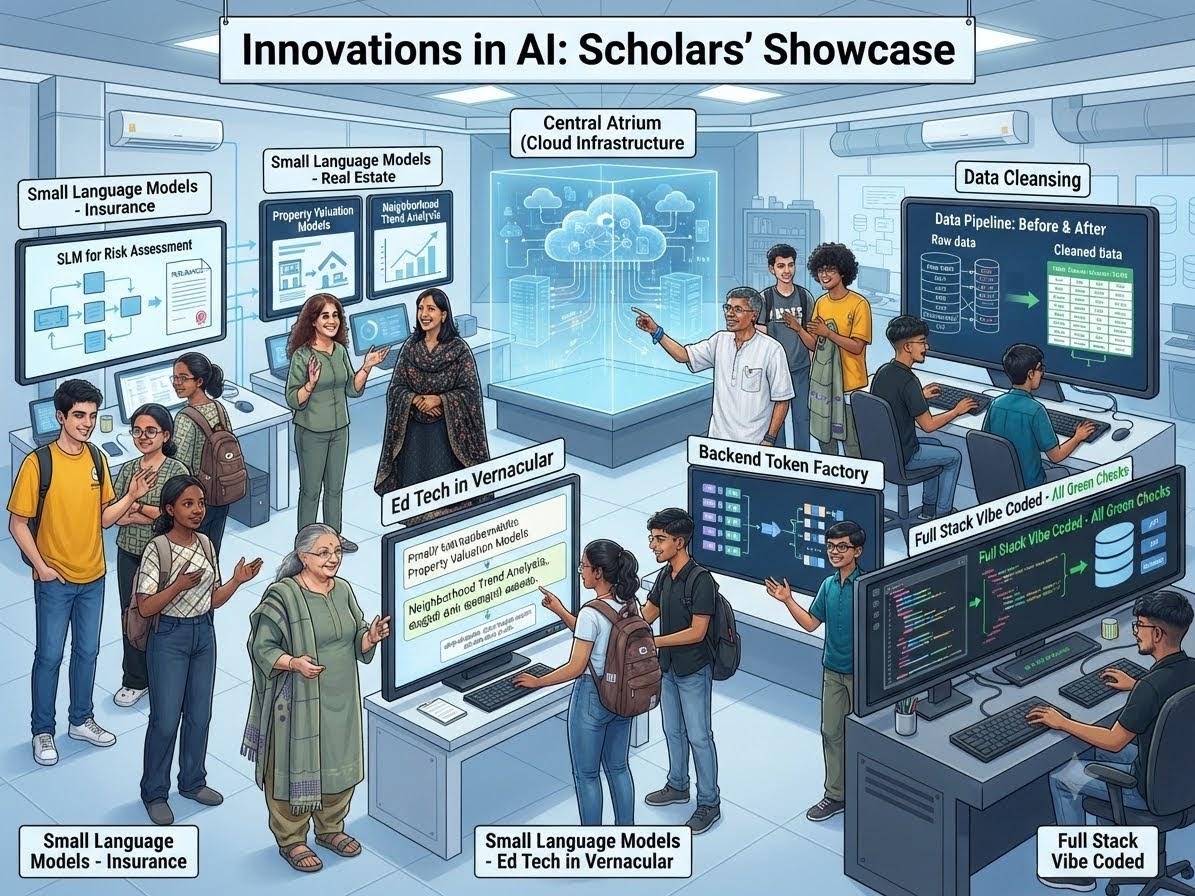
TAP scholarships fund exactly that gap. They’re more than financial aid — they’re a bridge over an economic chasm, one that can lift an entire family out of generational poverty. Getting through every layer of deficit to reach a college classroom is like winning the lottery. Those of us who make it are fortunate.
But not everyone makes it.
Story 3 — Adulthood: Shankar and Grace
Some people fall all the way through the cracks. Some spirits get broken. And in Chembur, there’s a man who goes looking for them.
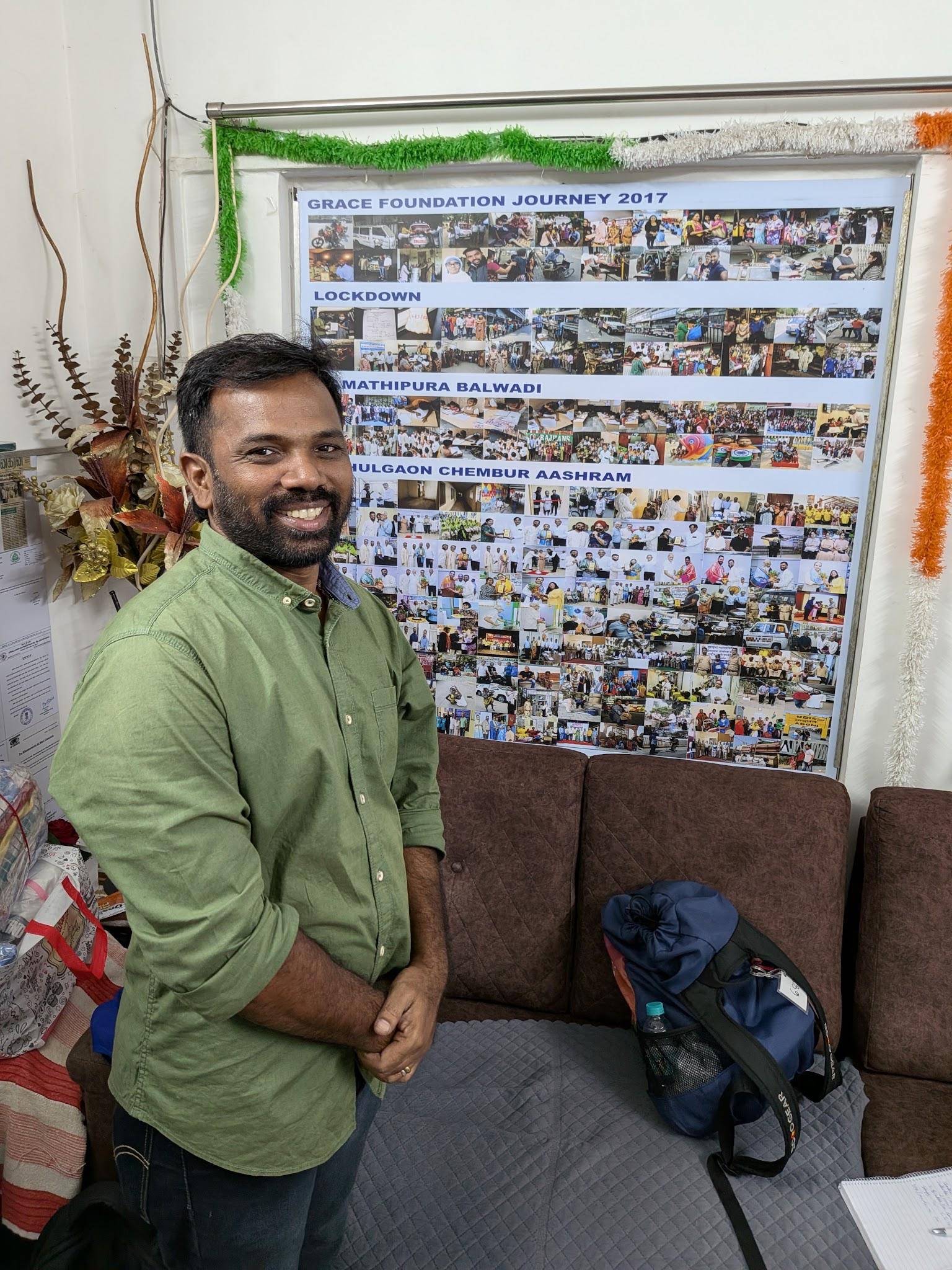
Shankar’s mother was a sex worker in Mumbai’s red-light district. He never made it past first grade. He grew up on the streets doing, as he put it to me, “legal and illegal” things, and considers himself lucky to have survived. He told me all of this straight — not to win sympathy, but to explain how fortunate he feels. He credits his wife as his rock.
He started Grace Mission with a two-wheeler, carrying aid to people on the pavement. Then came an ambulance. Then a home. The man who was once a target of police roundups is now the person the police call. Grace picks people up in whatever state they’re found — lying in their own filth, mentally ill, disabled — cleans each of them by hand, and gives them a bed, food, and medicine. A municipal hospital is a partner, doctors are on call, and the city allotted the space near RCF in Chembur.
The numbers are staggering for a place this size: 885 people reunited with their families, 840 discharged, and 83 residents today in a space built for 60. It runs on about ₹3.5 lakh a month.
I see only God in them. God has kept me alive. This must be the purpose.
Shankar, 45
A lot of us use words like these. Shankar says them in a way that is just oozing with meaning. Walking out, I felt I had met Mother Teresa in person.
If you’d like to support Grace directly, visit gracefoundationmumbai.com.
On the ground: Tyagu and Tarun Sadan
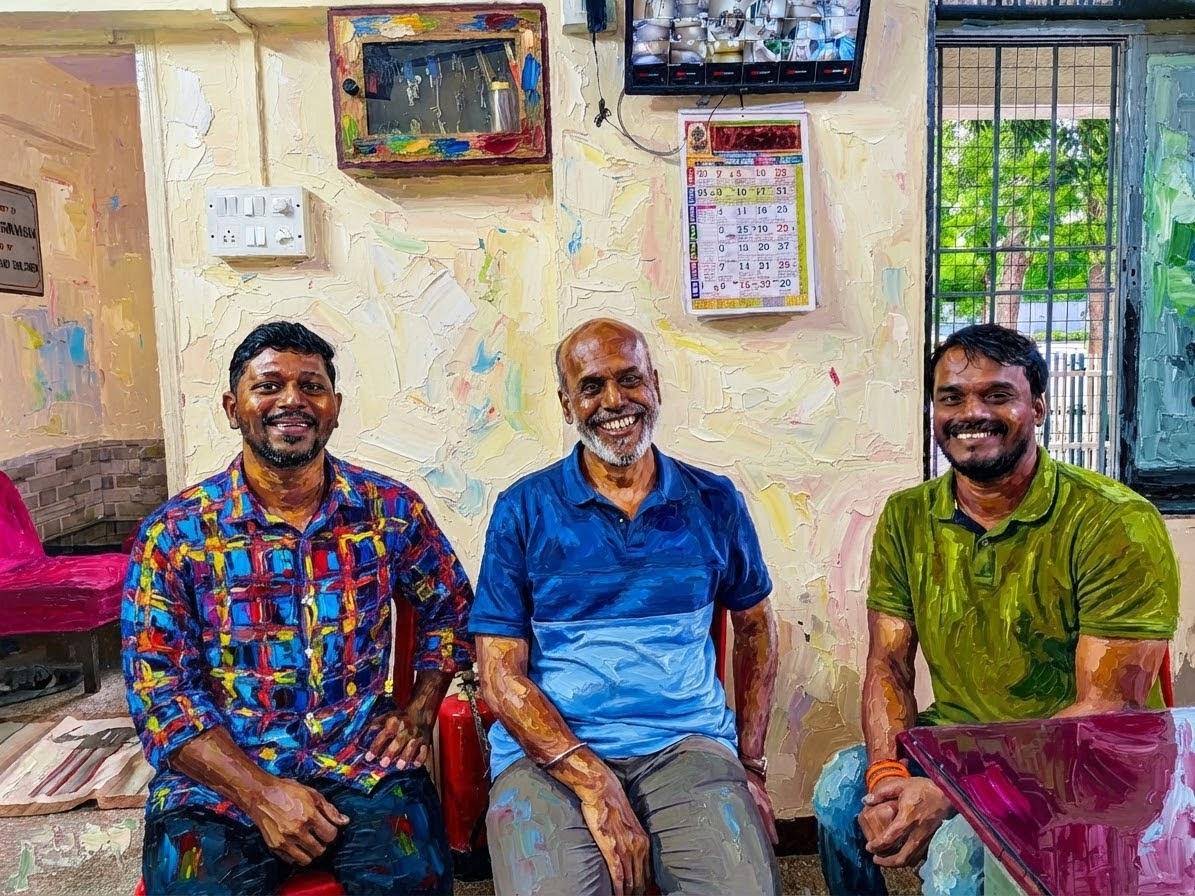
There is a continuum in these stories, from childhood to youth and adulthood, there is one person that helped me thread the needle through it all. Thyagarajan “Tyagu” Palani left a corporate software career to work pro bono — with LLF, supporting cancer patients at Tata Memorial Hospital, and at Tarun Sadan (under Vinimay Trust), a home for boys and young men facing institutional care, poverty, or displacement. Its alumni now work as ITI professionals, volunteers, and senior technicians at places like BARC.
If I’m solutioning at the PowerPoint level, Tyagu is solutioning on the ground. He’s built a Google Sheets tracker that flags patients who’ve missed specialist check-ups, so busy doctors don’t lose them. He does it all with a smile and no visible fatigue — and with a humility that still makes him ask whether he’s doing the right thing. He’s an inspiration to me.
Three ideas for TAP partners
Money only goes so far. Empathy and compassion carry the work on the ground. But I’m an engineer, and I make no apology for it — so I came back with proposals. One turned out to be underway before I’d finished describing it.
1. Closing the English gap. Apni Shala’s school is English-medium, and the comprehension gap widens as children move from elementary into middle school — exactly when interest starts to slip. TSEC’s NSS volunteers and GEF mentors could help close it. Before I’d finished the slide, Arpita Desai unmuted: it’s already happening. Mentoring starts in the first week of December, after TSEC exams. Arpita is already four steps ahead of me.
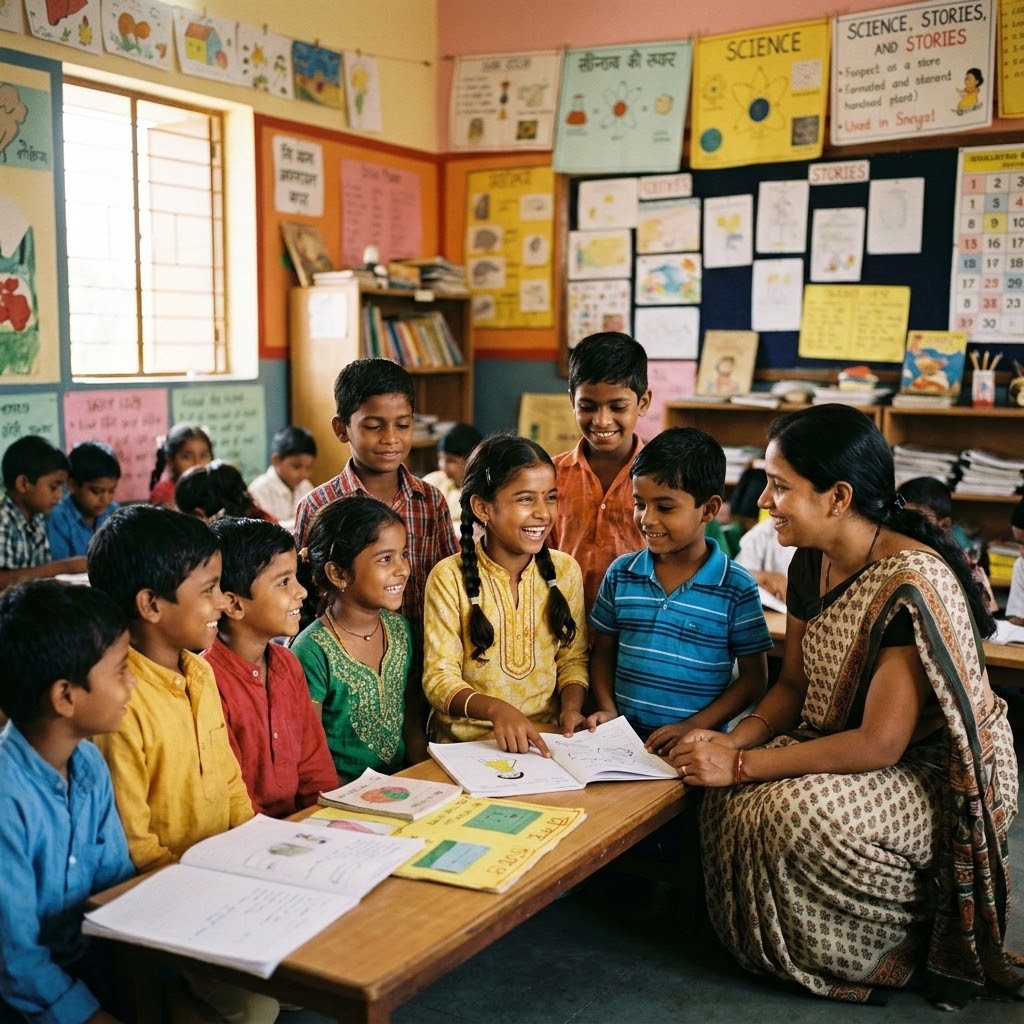
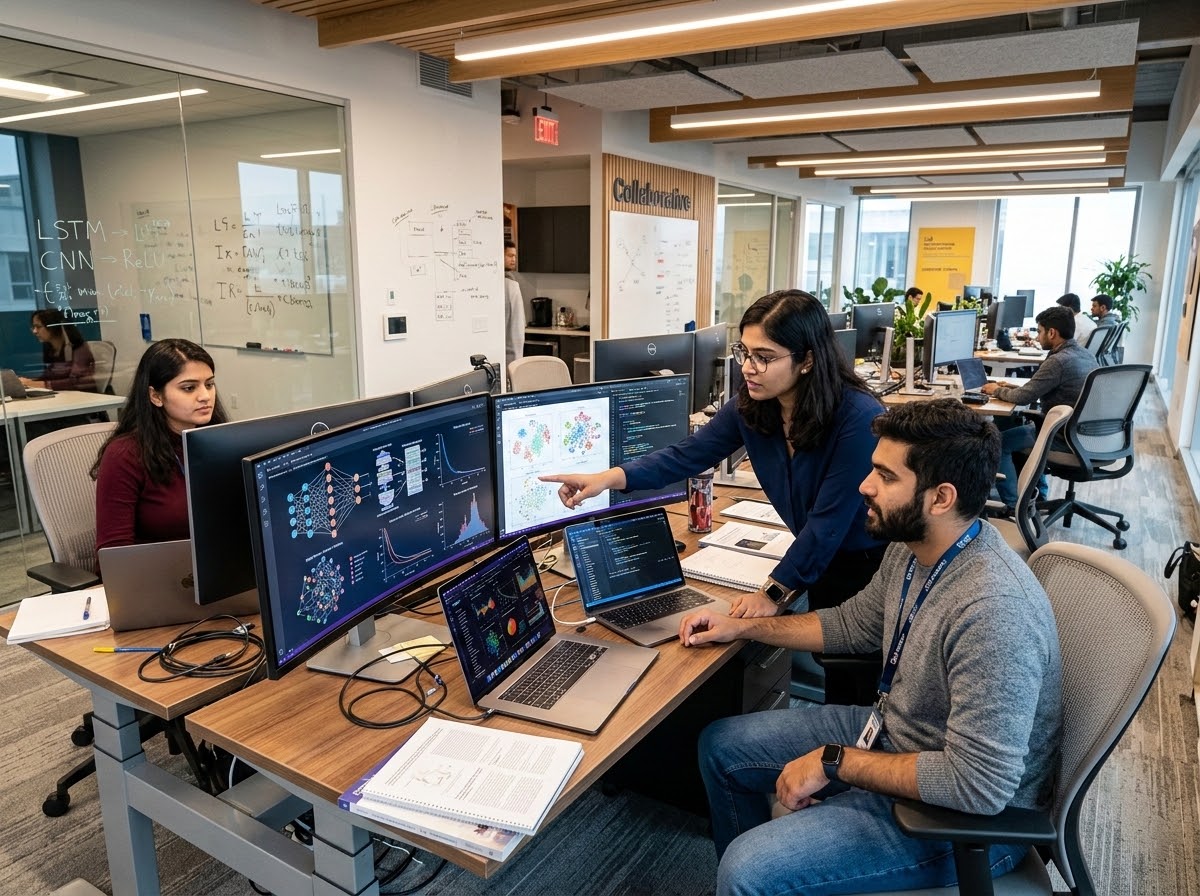
2. Real data for student data scientists. Apni Shala tracks SEL progress for about 4,500 students across 15 schools, and has done so for 13 years — a remarkably rich dataset. Rohit himself was a data-warehouse engineer before starting Apni Shala. TSEC scholars could analyse it as real fieldwork: insight for Apni Shala, real-world experience for the students. I can’t think of a better definition of win-win.
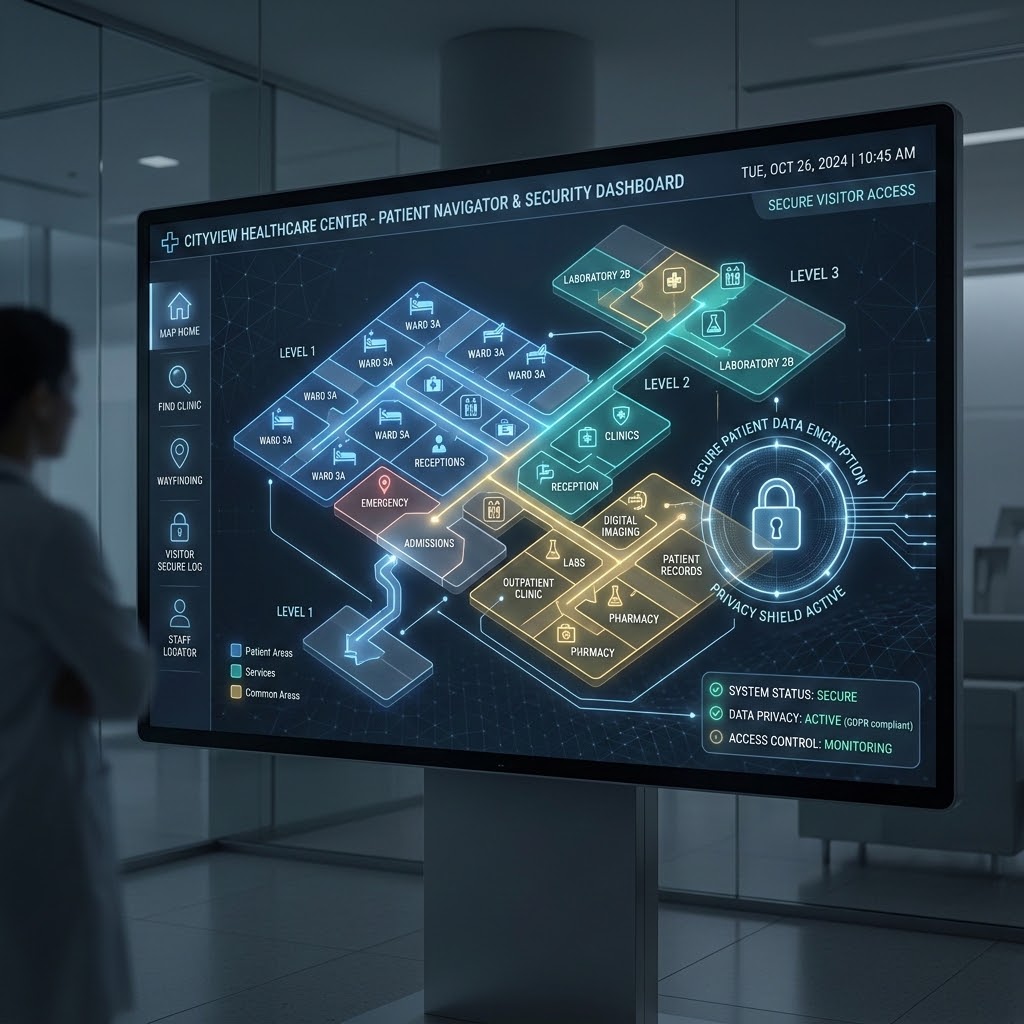
3. A patient navigation assistant. Tata Memorial Hospital is a crowded, multi-level campus — picture a Mumbai railway station at rush hour, except everyone there is ill, frightened, and has often run out of other options. LLF helps hundreds of these patients every day. A privacy-first, location-aware guide could walk them through it step by step. Tyagu welcomed the idea, and added another: a time-and-motion study to cut waiting and duplicated effort.
Thank you
I began that summer asking what I could possibly do in Govandi. I ended it with three stories I can’t stop telling — and a list of things TAP’s partners can now do together.
Thank you to Apni Shala — to Rohit and the educators who hosted me — and to TAP’s partners GEF, LLF, TSEC, Prayas and Idobro, and my fellow TAP volunteers on the ground. TAP enabled me to do this. I hope to be back in Mumbai next year.
Want to be part of the next story? Donate to TAP Charity or get in touch to volunteer.
Adapted from my talk “Stories of Hope & Resilience” at TAP Story Time, September 19, 2026. Names have been changed where noted. Some images are illustrations.